
Locally owned. Proudly serving all of Florida.
PAJOE.com Public AdjustersTalk to a public adjuster(954) 568-8932

St. Lucie County · Florida property insurance

Third-Party Property Claims in St. Lucie County

Did work at your St. Lucie County home leave physical property damage behind? Keep the project records and take safe photos. Pajoe may be able to help you review the insurance questions and your next steps.

Pajoe Public Adjusters · Licensed public adjuster: Joseph Whitefall, Florida License #E166230

· Firm License #W894577

What to look for at your St. Lucie County home

If a contractor’s work leaves physical damage at your St. Lucie County home, collect the agreement and photograph the changes safely. Keep payment records, change orders and the business name with your timeline. You can begin with the records already in your hands.

The county’s Citizen Self-Service platform covers permitting and contractor licensing for its area. Fort Pierce or Port St. Lucie may hold your local permit file instead. If an association hired the contractor, request its work and access records too. DBPR’s state-license link is listed below.

What to do first

  1. Make the area safe and arrange necessary protection. Stay away from unstable construction or damaged wiring. Take photos only where safe, before changes or repairs when practical.
  2. Save the original work agreement, changes to the scope and invoices. Write down the contractor’s business name and who hired it. Keep messages that explain the work and access dates. Keep roof replacement dates and permits with your own first-noticed damage notes.
  3. Photograph the physical damage and label the room or surface. Ask a qualified professional for findings if needed. Do not delay urgent cleanup or keep unsafe or contaminated material.
  4. Collect permit and license records using the links below. Keep any insurer letters with the project file. Pajoe may be able to help you review the insurance questions about property damage.

Documents that help your claim

  • The signed work agreement, later changes, invoices and payment records, with the contractor’s actual business name.
  • Safe before-and-after photos that show the damage to your property, labeled by room or surface.
  • Permit and license records, project messages and access notes that help put the work dates in order. Use your address to choose Port St. Lucie, Fort Pierce or the county for repair records.
  • Your property policy, any available insurance information and insurer letters, alongside a separate repair assessment. Save online permit records beside your repair scope. Fort Pierce North and South are separate from the city.

Planning repairs near you

For St. Lucie County repairs, Citizen Self-Service links permits and inspections for the county’s area. Port St. Lucie and Fort Pierce have city contacts. Fort Pierce North and Fort Pierce South are separate communities from the city. Check your address, then save the permit history with your repair plan.

How Pajoe may be able to help

If work damaged your St. Lucie County home, Pajoe may be able to help you sort out the claim file. We work for you, the policyholder, not the insurance company. Bring what you have. You can add missing details as the review moves forward.

We may be able to help sort the damage photos, work records and insurance letters into a clearer claim file.

If the matter fits our services and you hire us in writing, we may be able to inspect and document the damage. We may also be able to prepare an estimate, review the insurer’s offer and negotiate on your behalf. No recovery, no fee.

If Pajoe cannot assist, we are happy to refer you to an attorney who may be able to help. Pajoe does not receive any fee or payment for attorney referrals. Pajoe gives no legal advice. This service is for property damage, not bodily injury, death or noneconomic damages.
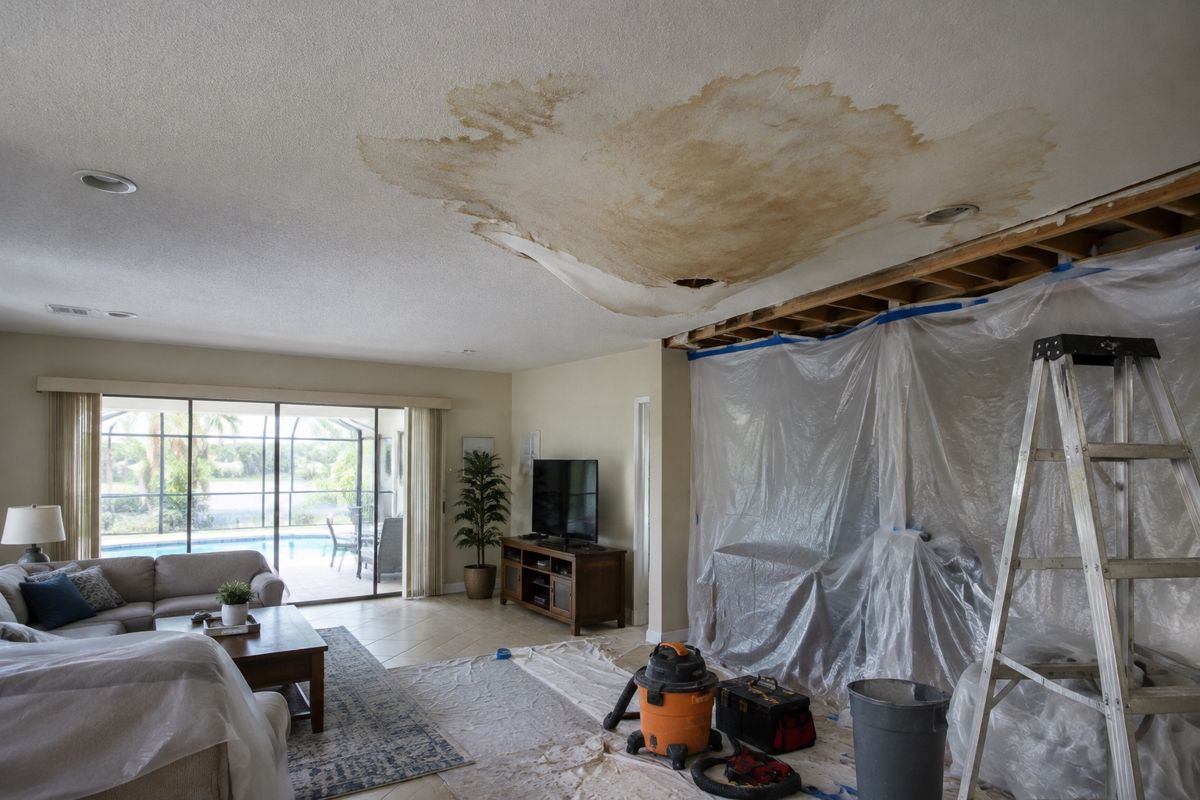
Water-stained, sagging living room ceiling during an unfinished renovation, with a ladder and tools nearby

Local storm and building facts for St. Lucie County

Here are local records and useful building contacts to keep with your home’s repair notes.

Every home and policy is different; these local reports show what’s been recorded nearby, not what happened at your property.

14 county declarations in the last ten years

FEMA lists 14 distinct DR/EM declarations designating St. Lucie County from November 26, 2016 through November 26, 2026, including biological incidents and separate emergency/disaster numbers. This is administrative history, not a storm count or evidence of coverage or eligibility.

FEMA · county-filtered declaration records · checked 2026-11-26

St. Lucie County building and permitting

The county lists Citizen Self-Service by Tyler EnerGov for permitting, inspections and contractor licensing, and identifies its role for unincorporated St. Lucie County.

St. Lucie County building and permitting · checked 2026-11-26

St. Lucie County emergency management

St. Lucie County has an official emergency-management resource. Follow its current access and safety instructions; historical reports on this guide do not replace them.

St. Lucie County emergency management · checked 2026-11-26

Florida DBPR license lookup

Florida DBPR provides searches by name, license number, city or county and license type. Check the actual regulated business; license status alone does not establish liability, coverage or construction quality.

Florida DBPR · official license search · checked 2026-11-26

Third-Party Property Claims: questions in St. Lucie County

Where should I start with contractor damage?

For your St. Lucie County home, start with safety and necessary protection. Then gather a few dated photos and any expert findings. You can bring the records you already have to Pajoe and talk through the next steps in a free claim review.

Can you help with contractor damage or an attorney referral?

Pajoe may be able to help with insurance questions about property damage at your St. Lucie County home. If you need legal advice, we can offer an attorney referral. Pajoe gives no legal advice and receives no fee or payment for attorney referrals. We do not handle bodily injury, death or noneconomic damages.

What if I am still collecting contractor damage records?

You can start with what you have for your St. Lucie County home. Photos, a short timeline and insurer letters are a useful beginning. Pajoe may be able to help you choose which records to ask for next. You can ask about the file before finding every missing piece.

Should I wait to clean up or keep damaged items?

For contractor damage, safety comes first. Photograph when safe and preserve samples only when safe and practical. Never keep contaminated items or delay urgent cleanup. Save expert findings and receipts for the work at your St. Lucie County home instead.

Who handles repair permits in St. Lucie County?

Use your property address to check the county or city or town office. The local links below help you find a starting point for contractor damage repairs. Ask your repair professional about the proposed work, then save the office’s response with your home records.

What does “No recovery, no fee” mean?

You can ask about the terms for your St. Lucie County home before you hire us. You pay a fee only if there is a recovery on your claim. We explain the fee in your written agreement before you sign.

Let’s talk about your St. Lucie County home

Call (954) 568-8932 or request a free claim review. Bring the records you have, tell us what worries you, and we’ll talk through how Pajoe may be able to help.

Services in St. Lucie County

Contractor damage / third-party claims in nearby South Florida counties

Towns and communities in St. Lucie County

Continue in St. Lucie County

Call PajoeFree Claim Review